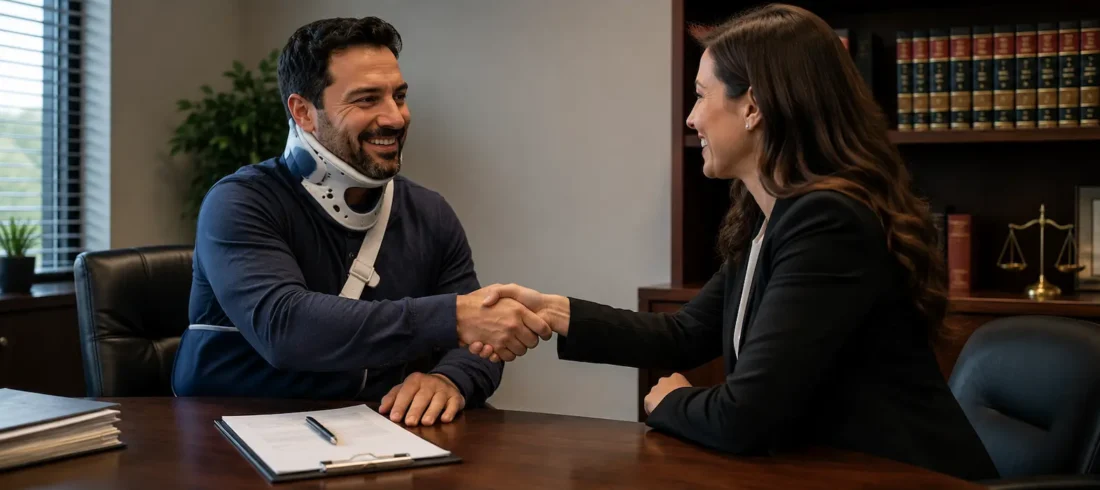
In the wake of a collision on the interstates, the immediate impulse is often to survey the wreckage of the vehicles. However, within the framework of tort law, a fundamental distinction exists: claims possess a higher value when they involve the human body rather than just steel and glass. This disparity isn’t a mere quirk of the system; it is a calculated recognition that while a bumper can be replaced and a door panel can be buffed, human physiology is a non-fungible asset.

Here at Tenina Law, we focus on the “grit” of the medical narrative. While property damage is essentially an accounting exercise, an injury claim is a reconstruction of a life. Understanding the mechanics of why these claims carry higher value is essential for any survivor seeking a recovery that truly matches the scale of their disruption.
Key Takeaways
- Distinguish between “special damages” (measurable bills) and “general damages” (human suffering) to build a multi-layered valuation.
- Audit medical records for “hidden” clinical markers—such as latent soft tissue damage or post-concussive symptoms—that insurance adjusters often try to categorize as minor.
- Quantify the loss of “hedonic value,” which is the Master Craftsman’s term for the loss of the enjoyment of life’s daily activities in the city.
- Challenge the “total loss” valuation of property when it is used by insurers to distract from the much higher liability of an ongoing physical injury.
In a Hurry? Dial +1213-596-0265 now!
The Replacement vs. Restoration Divide
The legal logic behind why claims possess a higher value is rooted in the concept of “making the plaintiff whole.” A vehicle has a definitive ceiling—its fair market value. Once a check is cut for that amount, the legal obligation for that specific piece of property is terminated.
Injury claims, conversely, are open-ended and dynamic. They account for:
- The non-linear path of physical rehabilitation and clinical recovery.
- The persistent psychological burden of a traumatic event.
- The erosion of personal independence and functional mobility.
- The long-term impact on a family’s domestic stability.
Because these losses cannot be “swapped out” like a car part, the financial compensation must scale to meet the permanence of the damage.
The Ceiling of Property-Only Disputes
Property damage claims are largely binary. You provide a repair estimate from a city body shop or a Blue Book valuation, and the negotiation is centered on those fixed numbers. There is no “pain and suffering” for a totaled sedan. This inherent limitation is why property-only disputes rarely command the attention of senior litigation teams—they are administrative hurdles rather than strategic legal battles.
Why Injuries Expand the Scope of Liability?
When the human element is introduced, the claim expands into several high-value categories that are absent in property-only cases. This is the primary reason why claims possess a higher value in the eyes of a jury.
Comprehensive Medical Trajectory
An injury claim captures the entire clinical lifecycle, including:
- Immediate trauma care and emergency diagnostic imaging.
- Inpatient hospital stays and surgical interventions.
- Long-term physical therapy and specialized neurological care.
- The projected cost of future medical needs, often spans decades.
Vocational Disruption and Earning Power
If a back injury prevents a tradesman from returning to the site or a brain injury keeps an executive from their desk, the claim must account for every lost dollar. This includes not just current missed paychecks, but the “lost earning capacity” over a lifetime.
The Intangible Human Element
Pain and suffering are not just “lawyer speak.” They represent the objective reality of living with chronic discomfort or emotional trauma. These non-economic damages are often the largest component of a verdict, reflecting the community’s consensus on the value of a pain-free life.
In a Hurry? Dial +1213-596-0265 now!
The Aggressive Stance of Insurers
Insurance companies are acutely aware that injury claims possess a higher value, which is exactly why they deploy their most aggressive adjusters to settle them quickly.
You can expect the defense to:
- Scrutinize your medical history for “pre-existing conditions.”
- Surveillance of your social media or daily activities to “prove” you aren’t hurt.
- Dispute the necessity of high-cost treatments or specialist referrals.
- Use “lecturer” tactics to make you feel as if your symptoms are exaggerated.
Evidentiary Requirements for High-Value Recovery
Because the stakes are higher, the burden of proof is more rigorous. A Master Craftsman approach to evidence includes:
- Verifiable Clinical Data: MRI films, EMG studies, and surgical reports.
- Economic Forecasting: Expert reports detailing the inflationary cost of future care.
- Witness Testimony: Statements from those who see the “boots on the ground” reality of your daily struggle.
- Impact Documentation: A “pain diary” or video evidence of physical limitations.
The Risk of the Early Settlement Offer
If an insurance company offers you a check within days of a crash, they aren’t being “helpful.” They are attempting to “buy” your claim for pennies on the dollar before the true extent of your injuries—like a herniated disc or TBI—fully manifests. Accepting an early payout is a permanent waiver; you cannot go back for more when the symptoms worsen.

Why Tenina Law is the Authoritative Partner?
Navigating a high-value injury claim requires a firm that understands the “grit” of litigation. We don’t settle for property-damage scraps.
Tenina Law provides:
- Strategic Valuation: We calculate the true, long-term cost of your injury, not just the current bills.
- Aggressive Advocacy: We push back against insurance tactics designed to devalue your experience.
- Resource Depth: Access to medical and vocational experts who provide the authoritative testimony needed to win in your location.
Final Thoughts
It is a fundamental truth of the legal system that injury claims possess a higher value because they represent an investment in a person’s future health and dignity. Property can be replaced, but your well-being is irreplaceable. Ensuring your compensation reflects that reality is not just a legal goal—it is a moral necessity.
If you are dealing with more than just a dented fender, you need a legal team that recognizes the true scale of your loss. Contact Tenina Law today to ensure your recovery matches the actual impact on your life.
In a Hurry? Dial +1213-596-0265 now!
FAQ
Q: Why is my injury claim worth more than my car?
A: Because humans have infinite potential for loss—including medical bills and future wages—while cars have a fixed market cap.
Q: What if my car is fine, but I am hurt?
A: The value of your claim is driven by your physical state, not the state of the vehicle. “Low-impact” collisions can still cause high-value spinal injuries.
Q: How long does it take to settle a high-value injury claim?
A: Typically longer than property damage, as we must wait for you to reach “Maximum Medical Improvement” to know the true cost.
Q: Will I have to go to court?
A: Most claims settle, but we prepare every case for trial to force the insurance company to offer a fair amount.
Q: Can I handle an injury claim myself?
A: You can, but you will likely be low-balled. Research shows that represented clients consistently secure significantly higher settlements.