
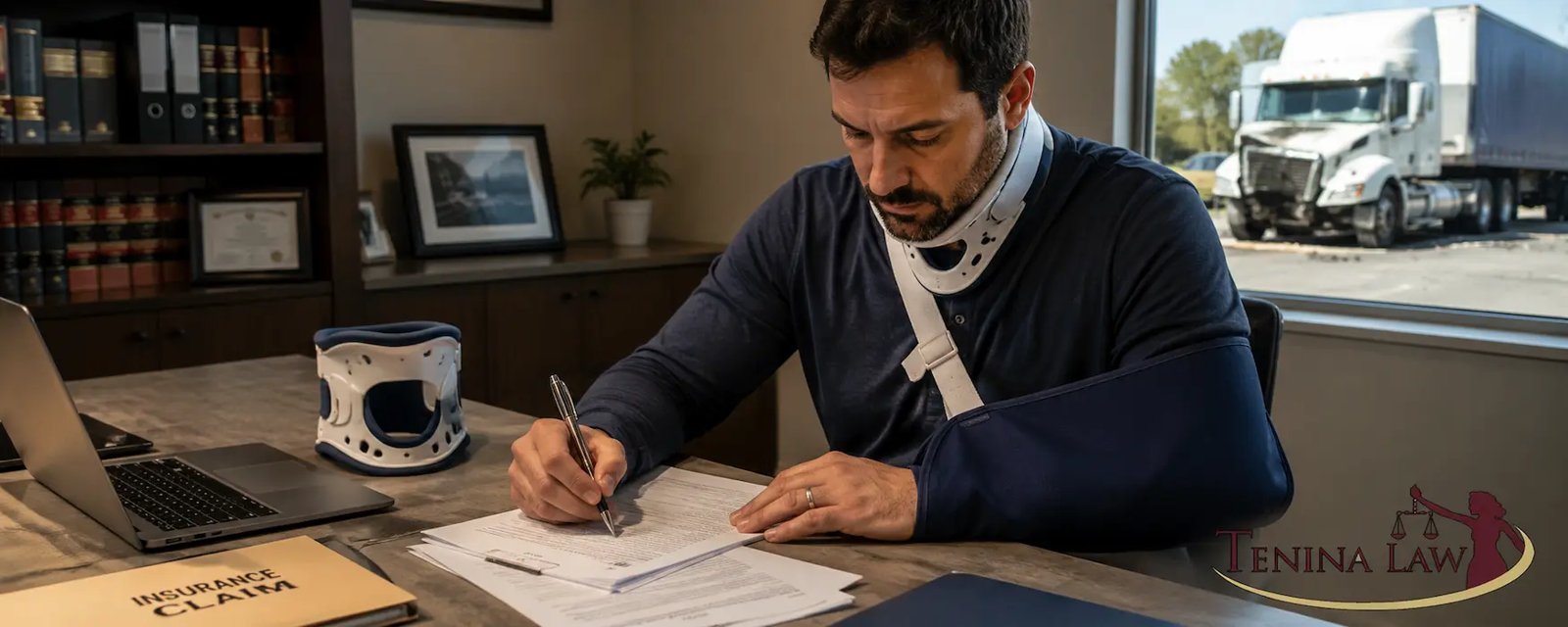
It happens more than you’d think in Los Angeles. You’re stopped at a red light on Sepulveda, someone rear-ends you, and the other driver gets out, apologizes, hands over a name and number, and then admits they don’t have insurance.
Most people’s first thought is that they’re out of luck.
Usually, they’re not. At Tenina Law in Sherman Oaks, the first thing we tell people in that spot is to dig out their own auto policy. Here’s how a claim under California uninsured motorist coverage usually works, and where people get tripped up.
In a Hurry? Dial 213-596-0265 now!
Key Takeaways
- California uninsured motorist coverage only helps if it’s on your policy, so check before you need it.
- Check your declarations page for uninsured motorist bodily injury coverage.
- UM covers drivers with no insurance. UIM covers drivers without enough of it.
- Your own insurer isn’t on your side in a UM claim.
- Unsettled claims usually go to arbitration, so put the two-year deadline on your calendar.
Check Your Declarations Page
Look for a line for uninsured motorist bodily injury coverage, often called UM.
California Insurance Code section 11580.2 requires insurers to offer it with auto liability policies. Drivers can turn it down, but only in writing. If you never signed a rejection, there’s a good chance you have it.
UM vs. UIM
UM steps in when the at-fault driver has no insurance at all.
Its cousin, underinsured motorist coverage, or UIM, applies when the at-fault driver has insurance but not enough to cover your injuries.
Both usually cover medical bills, lost pay and pain and suffering, up to the limits you bought. Damage to the car itself usually falls under different coverage, like collision or uninsured motorist property damage, so check those lines too.
Call the Police
Call the police from the scene and get a report. That matters a lot.
Hit-and-run claims under UM coverage have extra rules in California. There has to be physical contact. The crash generally has to be reported to police within 24 hours. And a written claim to the insurer is due within 30 days.
Even when the other driver stays, a police report with their name and lack of insurance helps from day one.
Tell Your Insurer, and Keep a Log
Open a claim with your insurer. Give them the other driver’s information and the police report number, and explain that you were hurt. Keep a log of every call, with dates and names.
Take photos of your car, the intersection and any visible injuries, like a seat belt bruise. Pictures from the first few days often say more than anything you can describe later.
Your Own Insurer Isn’t on Your Side Here
This surprises nearly everyone, so we’ll say it plainly.
In a UM claim, your own insurer stands in the at-fault driver’s shoes. The company you’ve paid for years will look at your claim the way the other driver’s insurer would. They’ll question your injuries, your treatment and whether you were partly at fault.
Being a loyal customer doesn’t change how a bodily injury claim gets valued. Knowing that early saves a lot of frustration.
Keep Treating and Keep Records
Keep going to treatment, whether that’s your doctor, physical therapy or both. Save every bill and every note. Document the time you miss at work.
If the adjuster asks for a recorded statement early on, it’s reasonable to ask to have your attorney present first.
The Demand and the Back-and-Forth
When treatment wraps up, a demand gets put together with the medical records, bills, wage loss and a description of how the injuries affected daily life.
The insurer makes an offer. Often it’s low. Then there’s negotiation.
What a UM Claim Can Include?
People often undersell their own claims. Beyond the ER visit, think about follow-up appointments, physical therapy, prescriptions, mileage to and from treatment, and time off work for those visits. Pain that keeps you from sleeping, lifting your kids or getting through a shift counts, too. Write it down as it happens, because memory fades fast and adjusters want specifics.
Arbitration, Not a Lawsuit
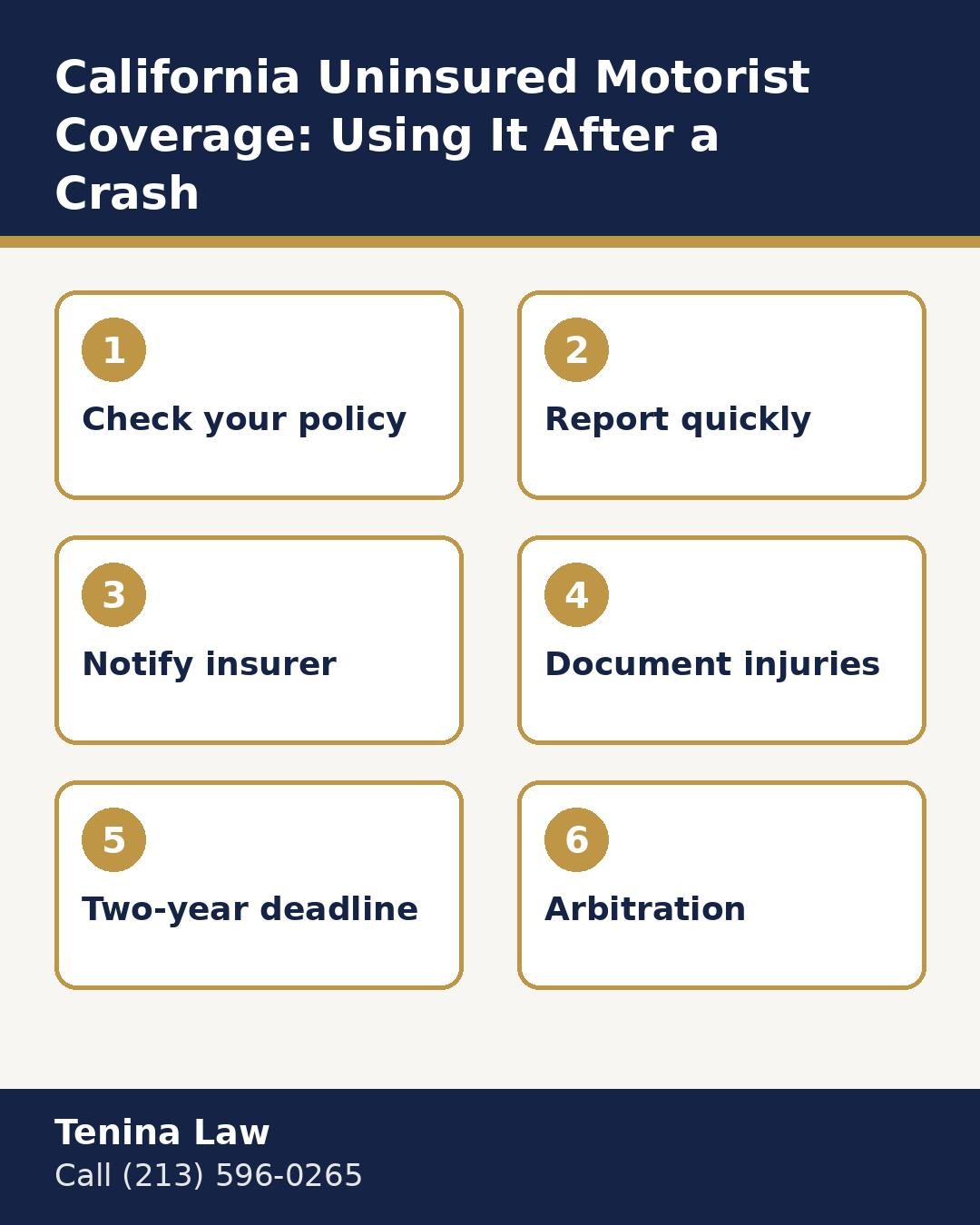
If a UM claim can’t be settled, it usually goes to arbitration. In most cases you don’t sue your own insurer. A neutral arbitrator hears both sides and decides the amount. Your policy language and the Insurance Code set the details.
The Two-Year Deadline
This one trips people up, so please put it on your calendar.
Within two years of the accident, you generally have to do one of three things. Settle the claim with your insurer, file a lawsuit against the uninsured driver, or formally start arbitration.
Missing that window can end the claim. We calendar it on day one.
If the Other Driver Had a Little Insurance
Then you’d first claim against their policy. Once that pays out to its limit, you can make an underinsured claim on your own policy for the rest, up to your UIM limits. Generally, the other driver’s payment gets credited against what UIM pays.
What We’d Tell a Friend
Check your policy now and make sure you didn’t sign away UM coverage when you bought it.
Think about whether your limits are high enough. Many California drivers carry only the minimum.
Call the police after any crash. Report to your insurer quickly. Keep every record. Watch the two-year deadline.
When to Call a Lawyer?
It helps when your own insurer disputes fault or questions your care, after a low offer, and as the two-year deadline gets close.
Tenina Law helps people across Los Angeles with car accident claims, including those under California uninsured motorist coverage. Attorney Alla Tenina is licensed in California and has more than 20 years of civil litigation experience. You can also read about personal injury insurance in California on our site.
For more, see how to judge an insurance company settlement offer, common defenses against car accident claims in California, Los Angeles car accident lawyer, Sherman Oaks car accident attorney and contact page.
Talk to Tenina Law
Call (213) 596-0265 if you were hurt by an uninsured or underinsured driver. Our office is at 15250 Ventura Blvd, Suite 1200, Sherman Oaks.
In a Hurry? Dial 213-596-0265 now!
Frequently Asked Questions
Q: Is uninsured motorist coverage required in California?
A: Insurers must offer it, but you can reject it in writing.
Q: How long do I have to make a UM claim in California?
A: Generally, within two years you must settle, sue the uninsured driver or start arbitration.
This article is general information about California law and is not legal advice. Reading it does not create an attorney-client relationship. Every case is different, and prior results do not guarantee a similar outcome. Tak to a lawyer.