
Lane splitting, which California riders rely on every day in rush-hour traffic, is legal, and that single fact changes a lot of motorcycle injury claims. California is the first state to define the practice in law, through Vehicle Code section 21658.1, added by AB 51 in 2017. Riding between lanes of stopped or slow traffic isn’t a violation by itself. Still, when a car changes lanes into a splitting rider on the 405 or the 101, the insurer’s first move is often to blame the motorcycle. At Tenina Law in Sherman Oaks, we see that argument in many of the motorcycle cases we review.
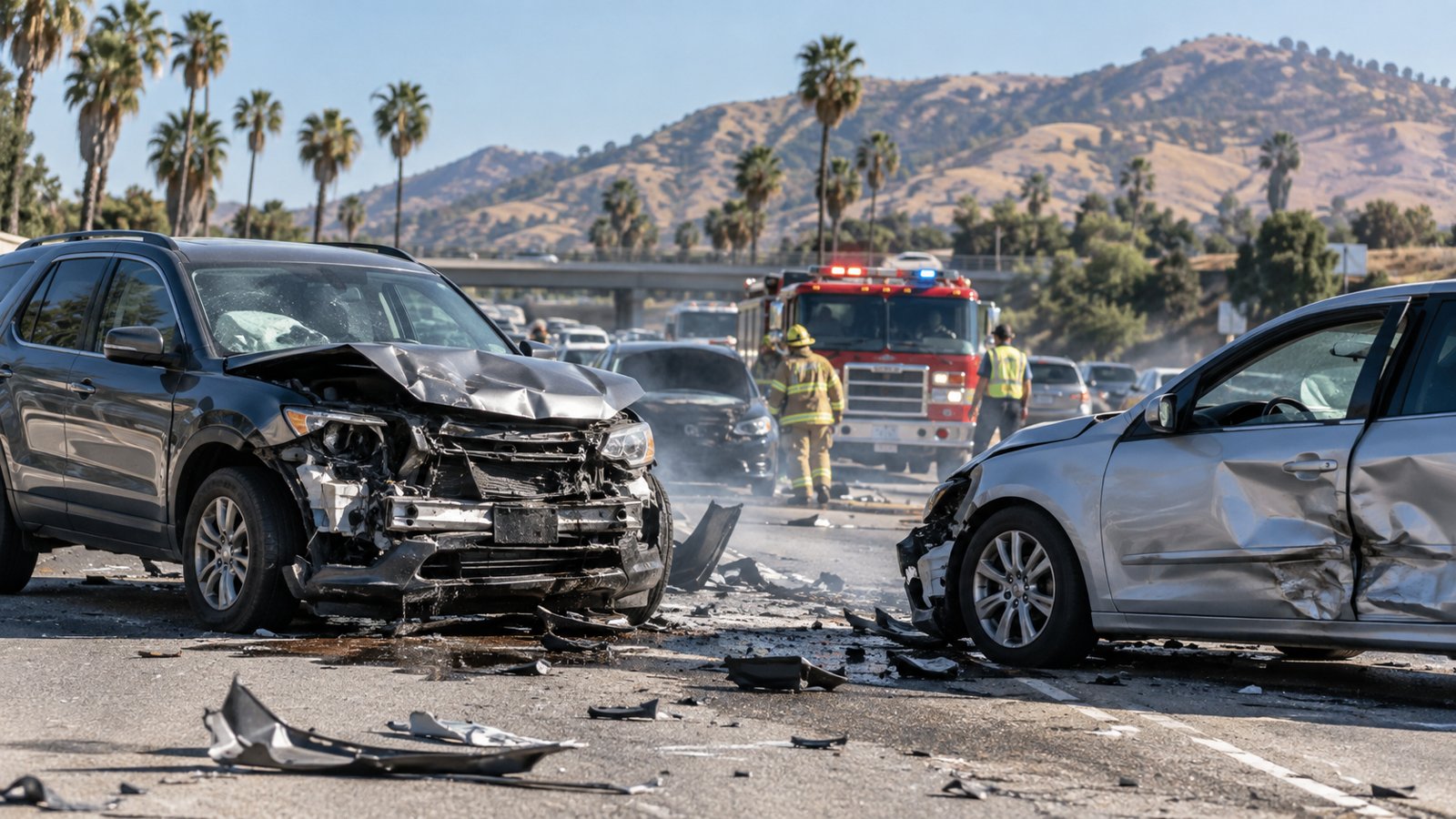
Key Takeaways
- Lane splitting is legal in California, but riders must still ride safely.
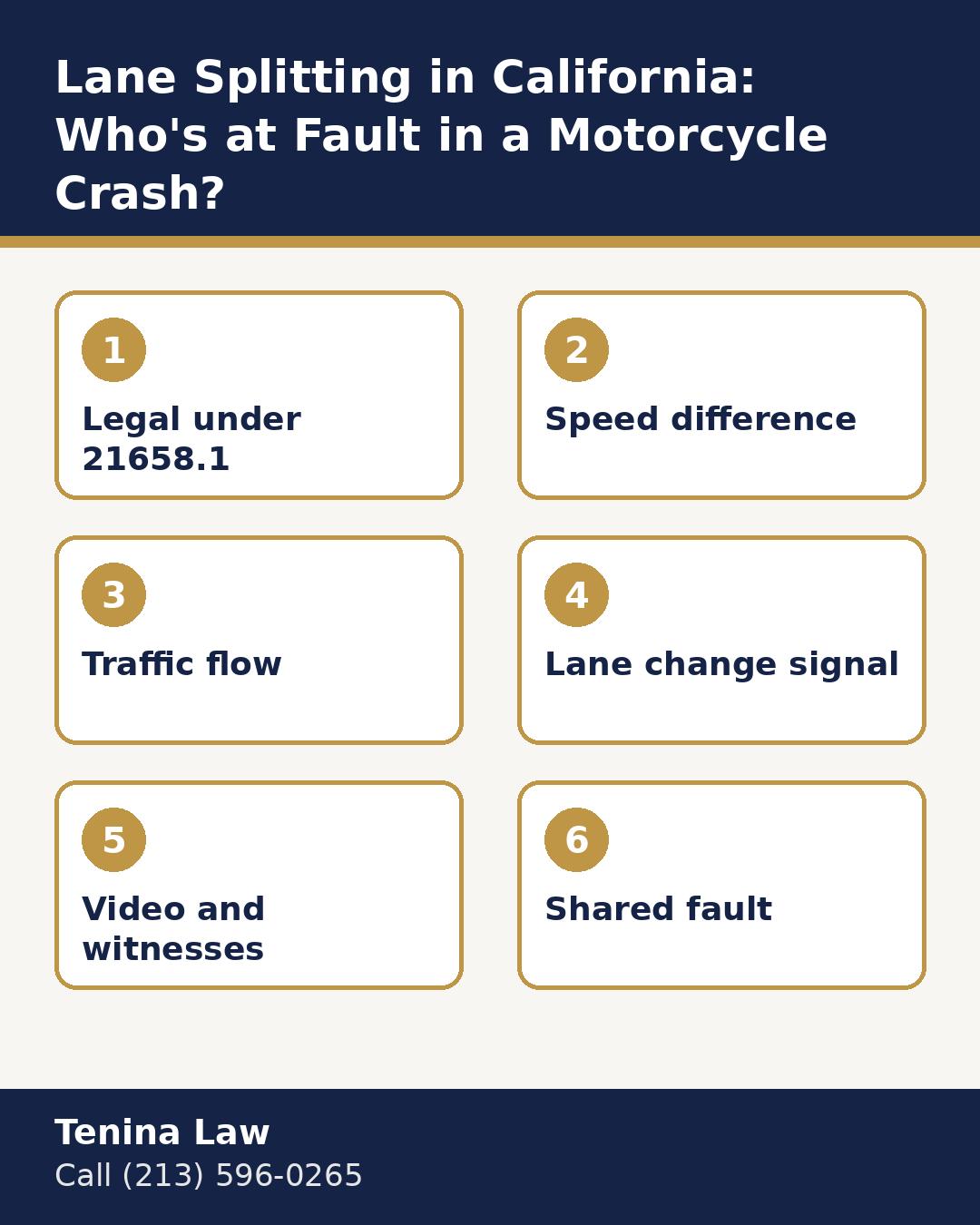
- Fault depends on speed, traffic conditions, lane changes, and available evidence.
- California’s comparative negligence law allows riders to recover compensation even if partially at fault.
- Helmet camera footage, photos, witness statements, and medical records can strengthen a claim.
- Preserve evidence and understand your legal options before speaking with the other driver’s insurer.
What Does the Law Actually Say?
Section 21658.1 defines lane splitting as driving a two-wheeled motorcycle between rows of stopped or moving vehicles in the same lane, including on divided highways. It also makes it illegal for a driver to intentionally block or impede a rider who is splitting lanes, or to open a door to block one. The CHP is allowed to publish safety guidelines. Those guidelines aren’t laws, but they’re often cited in fault arguments.
Past CHP guidance suggested riders avoid splitting when traffic moves faster than about 30 mph and keep the speed difference to about 10 mph or less. Insurers use those numbers as a yardstick, even though breaking them isn’t a ticketable offense.
How Is Fault Decided After a Lane-Splitting Crash?
California uses pure comparative negligence. Each party’s share of fault is weighed, and the rider’s recovery drops by the rider’s share. So the question isn’t usually “who’s 100% at fault?” It’s “how much does each side carry?”
| Fact | Points toward the driver | Points toward the rider |
|---|---|---|
| Driver changed lanes without signaling | Yes | |
| Driver opened a door into the gap | Yes | |
| Rider traveling far faster than traffic | Yes | |
| Rider splitting at highway speed | Yes | |
| Traffic stopped or crawling | Supports rider | |
| Video showing the full sequence | Depends on what it shows | Depends |
Walking Through One Lane-Splitting Claim
This hypothetical example shows how the fault argument develops. It is not a real client.
Hypothetical example. Leo is splitting lanes on the 101 near Van Nuys Boulevard during the evening rush. Traffic is moving at about 15 mph. Leo is going about 25. A sedan in the left lane moves right without signaling to reach the exit, and clips Leo’s handlebar. He goes down and breaks his collarbone.
The insurer’s opening position is that Leo assumed the risk by splitting lanes, and should carry half the fault.
The first job is pinning down speeds. Leo’s speed difference is about 10 mph, which lines up with the old CHP guidance. Traffic was slow. Those facts weaken the insurer’s argument that his riding was unsafe.
The second job is the lane change. Vehicle Code 22107 requires a driver to signal and to move only when it’s reasonably safe. If a dashcam from a nearby car or freeway footage shows no signal, that’s strong evidence. We’d also check the sedan driver’s phone use around the time of the crash.
The third job is damages. A collarbone fracture may need surgery and weeks off work. Medical records and wage documentation establish the value before percentages are applied.
Now the decision. If the evidence supports a no-signal lane change into slow traffic, the realistic fault range for Leo might be small, or zero. If the video showed him weaving at high speed, it would be larger. Leo would choose between a negotiated settlement and a lawsuit based on where that evidence lands. Lane splitting in California being legal gives him a starting point, and the evidence decides the rest.

Why Does Lane Splitting California Law Matter to Insurers?
Before 2017, an adjuster could argue that a rider between lanes was breaking a rule just by being there. Section 21658.1 took that argument away. Now the insurer has to point to how the rider split lanes, such as the speed difference, the traffic speed or weaving, rather than the fact of splitting. That shift is why lane splitting california claims are often stronger than riders expect. It also means the rider’s own footage and the timing of the lane change carry most of the weight. A good claim file shows the traffic speed, the gap, and the moment the car moved over.
What Should Riders Keep After a Crash?
Helmet camera footage is often the best evidence a rider has, so save it right away. Photos of the bike, the car’s damage, the road and any witness names help too. Get medical care quickly, since gaps in treatment are used against injury claims. Write down what you remember about the lane change while it’s fresh, including whether you saw a turn signal. Avoid recorded statements to the other driver’s insurer until you understand your options.
Our page for motorcycle accident lawyers in California explains how we handle these claims. You can read how long a motorcycle accident lawsuit takes, learn about common defenses against accident claims in California, and see how personal injury insurance in California works. Riders in the Valley can also visit our Sherman Oaks car accident attorney page.
Talk to a Sherman Oaks Motorcycle Accident Attorney
If you were hurt while splitting lanes, call Tenina Law at (213) 596-0265 or reach us through our contact page. We’ll review the evidence and explain how lane splitting california law affects your claim.
FAQ
Q: Is lane splitting legal in California?
A: Yes. Vehicle Code 21658.1 defines lane splitting, and it’s legal for two-wheeled motorcycles.
Q: Is the rider automatically at fault in a lane-splitting crash?
A: No. Fault depends on speed, traffic, signals and other evidence, and it can be shared.
Q: Can a driver block a lane-splitting motorcyclist?
A: No. California law prohibits intentionally blocking or impeding a rider who is lane splitting.
Q: Are CHP lane-splitting guidelines laws?
A: No. They’re safety guidance, though insurers and juries may consider them.
This article is general information about California law and is not legal advice. Reading it does not create an attorney-client relationship. Every case is different, and prior results do not guarantee a similar outcome. Contact an Attorney now!