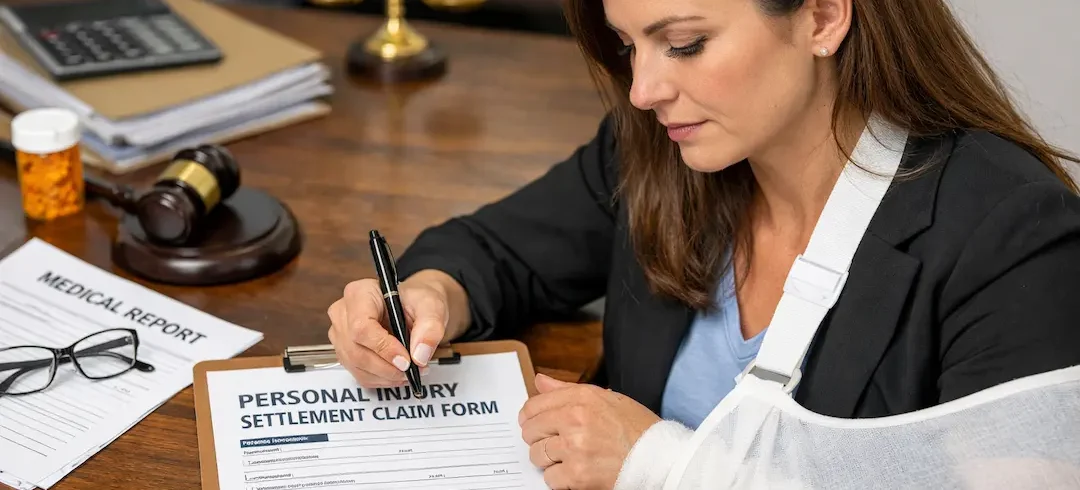

After sustaining an injury in an accident, you filed a personal injury claim and sent a demand letter to the at-fault party’s insurance company. The insurer responded with a low personal injury settlement offer. How should you handle this situation?
Read: Why Having a Personal Injury Lawyer Is Very Important?
In a Hurry? Dial +1213-596-0265 now!
Is the Insurance Company’s Offer Too Low?
Yes, it probably is. Insurance companies often start with a low settlement offer because their initial goal is to minimize payouts, not provide fair compensation. Understanding this tactic can help you respond strategically rather than emotionally.
Look for these common signs during negotiations:
- The initial offer seems unreasonably low.
- The adjuster emphasizes your need to settle quickly.
- Pressure tactics are used to make you accept less than you deserve.
How the Settlement Process Works
Most personal injury cases settle without going to trial. Settlement negotiations typically involve several rounds of discussion between you (or your attorney) and the insurance adjuster.
The process usually begins with your demand letter, which:
- Describes the accident and resulting injuries
- Documents medical treatment and related expenses
- Explains the other party’s legal responsibility
- Requests a specific settlement amount
Your opening demand should exceed the amount you’re willing to accept, but remain reasonable. An unreasonably high demand can signal inexperience and weaken your negotiating position.
The Insurance Company’s Response
The adjuster will usually reject or counter your initial demand. This is normal and expected. Their goal is to secure the lowest payout possible.
A low personal injury settlement offer—often called a “lowball offer”—may feel insulting. It’s important to stay calm and avoid reacting emotionally. Take time to evaluate the offer carefully before responding.
Understanding the Adjuster’s Strategy
The insurance company handles thousands of claims each year. Adjusters are trained to minimize payouts, especially when claimants do not have legal representation.
You may feel financial pressure if you are missing work or incurring medical expenses. This is why the adjuster might see you as an easy target for a lowball offer.
Maintaining composure and responding strategically is crucial. You should:
- Send a brief letter noting that the offer is insufficient
- Request the adjuster to reconsider your original demand
- Consider hiring a personal injury attorney to evaluate the full value of your claim

In a Hurry? Dial +1213-596-0265 now!
How to Counter a Low Personal Injury Settlement Offer
Responding effectively involves four steps:
- Determine the value of your claim
- Adjust your valuation if needed
- Assess the adjuster’s offer
- Create a counteroffer
Step 1: Calculate Your Economic (Special) Damages
Economic damages compensate for financial losses, including:
- Medical bills and treatment costs
- Property damage
- Lost wages or income
- Other out-of-pocket expenses
Gather documentation for all expenses, including medical records, billing statements, and a letter from your employer confirming lost income. Calculate total past and expected future costs.
Step 2: Calculate Your Non-Economic (General) Damages
Non-economic damages compensate for:
- Pain and suffering
- Emotional distress
- Permanent injuries or disfigurement
- Loss of enjoyment of life
Calculating these damages is complex and often involves a multiplier system. Typically, medical expenses are multiplied by a factor between 1 and 5, depending on severity.
Step 3: A Simple Example
Scenario: You slip and fall at a grocery store, breaking your wrist.
- Medical expenses: $4,500
- Lost wages: $1,000
- Future treatment: none expected
Using a multiplier of 4 for non-economic damages:
- Non-economic damages = $4,500 × 4 = $18,000
- Economic damages = $5,500
Total claim: $23,500
Tip: Start with a higher initial demand than your expected settlement to allow room for negotiation.
Final Thoughts
Receiving a low personal injury settlement offer is usually a negotiation tactic, not a reflection of your claim’s true value. Do not accept less than what your damages are truly worth.
Working with a skilled personal injury attorney can help you:
- Accurately evaluate your claim
- Handle negotiations professionally
- Maximize your compensation
Contact Tenina Law in Sherman Oaks, CA, today to schedule a consultation and protect your rights.
In a Hurry? Dial +1213-596-0265 now!
Frequently Asked Questions
Do I need a lawyer if I receive a low settlement offer?
Yes. An attorney ensures you do not accept less than your claim’s full value and can negotiate effectively with the insurer.
What is a lowball offer?
A lowball offer is an initial settlement amount intentionally lower than the claim’s true value to pressure you into settling quickly.
How should I respond to a low personal injury settlement offer?
Stay calm, document your damages, evaluate the offer, and send a counteroffer. Consider hiring an Allah Tenina lawyer for guidance.
Can I negotiate a higher settlement?
Yes. Most settlements are negotiated. Presenting clear evidence of damages and proper valuation often increases the final offer.
What factors affect non-economic damages?
Pain, suffering, emotional distress, permanent injury, and loss of enjoyment of life. Severity and impact on daily life determine the multiplier used for calculation.