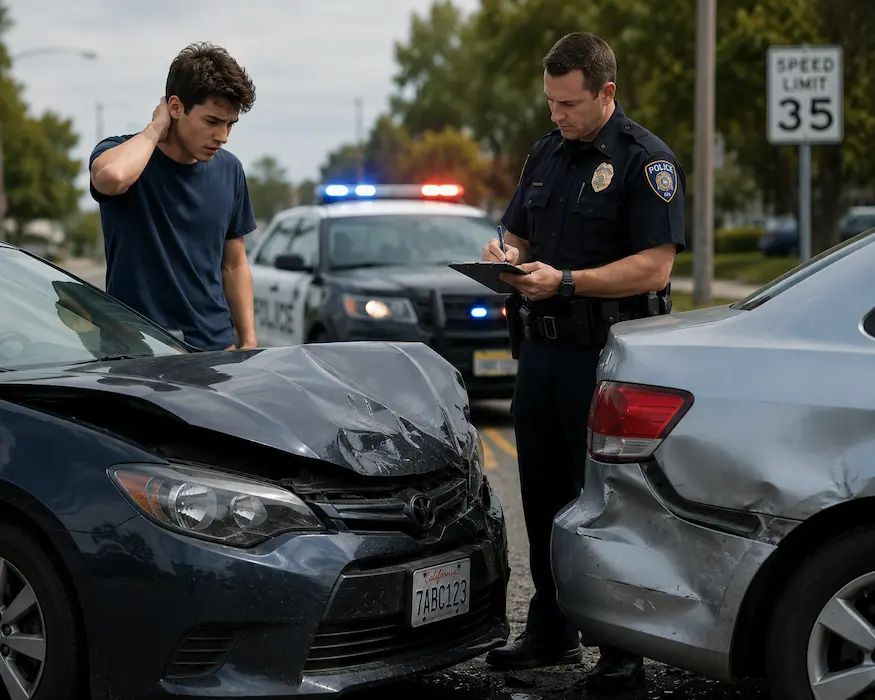
The reality on the ground is that letting someone drive your vehicle without checking their credentials can trigger an absolute nightmare of insurance denials and courtroom battles. If you have an unlicensed driver who takes the wheel and causes a collision in California, you are facing severe exposure. Your personal assets are suddenly on the line because California law links auto liability tightly to the vehicle itself, not just the person steering it.
Key Takeaways for Vehicle Owners
- Permissive Use Risks: Your insurance policy typically covers anyone you explicitly allow to drive, but an unlicensed driver violates your policy terms.
- Negligent Entrustment Liability: You can be held personally and financially liable for damages if you knowingly let an unlicensed person operate your car.
- Vicarious Parent Responsibility: California vehicle owners are automatically responsible for crashes caused by minor children under parental authority.
- Direct Coverage Exclusions: Insurers routinely deny collision claims or cancel policies entirely when unauthorized, non-licensed drivers crash a vehicle.
In a Hurry? Dial +1213-596-0265 now!
How Does California Law Treat a Vehicle Owner After a Crash?
If an unlicensed driver crashes your car, your insurance company may deny your claim, you could face legal ramifications, and you may be liable for any damages the driver caused. California enforces strict rules regarding vehicle owners’ responsibilities, treating the act of handing the keys to an uncertified motorist as a major legal and financial breach.
Here’s the part most insurance adjusters won’t tell you: standard policies are built on the concept of permissive use. While your coverage usually extends to friends or family, that coverage becomes void under the law if the person lacks a valid license. This structural breakdown gives your carrier a clear legal path to drop your coverage, leaving you holding the bill for third-party injuries and crumpled steel.
What Are the Steps to Resolve an Unlicensed Driver Claim?
- Secure the Physical Scene and Report
- Call local law enforcement immediately to file a formal accident report documenting the unlicensed status.
- Take detailed photographs of vehicle positions, structural damage, and specific road conditions before vehicles are moved.
- Collect Third-Party and Witness Documentation
- Gather written witness statements and contact numbers from bystanders at the scene.
- Document the driver’s exact personal history and state of mind immediately following the impact.
- Engage Professional Legal Counsel
- Consult with a dedicated car accident attorney to review your policy conditions and protect your assets.
- Navigate direct insurance carrier investigations without admitting fault or making uninformed statements.
How Do Specific Accident Scenarios Direct Legal Responsibility?
Risk Mitigation
- The Stolen Vehicle Defense: If a thief or unauthorized third party takes your vehicle without permission, you generally escape civil liability.
- The Broken Policy Chain: Insurance companies only cover permissive use, meaning a thief’s actions do not bind your personal insurance coverage.
- Asset Defense Tactics: You must aggressively prove lack of consent through a prompt police report to avoid civil lawsuits from injured victims.
Technical Execution
- Negligent Entrustment Charges: Knowingly permitting an unlicensed individual to drive your car is a misdemeanor offense under the California Vehicle Code.
- Vicarious Liability Bounds: Parents face automatic financial exposure if a minor child takes the keys and causes an accident.
- Policy Rescission Threats: Car insurance providers can legally cancel your policy after an incident involving non-permissive or illegal operations.
Traditional Owner Coverage vs. Unlicensed Driver Exposure
| Financial & Legal Factors | Standard Permissive Driver | Unlicensed Driver Operation |
| Primary Insurance Status | Covered under standard vehicle policy limits. | Severe risk of claim denial or policy cancellation. |
| Personal Asset Exposure | Limited by standard policy protection caps. | Total exposure via direct civil lawsuits. |
| Criminal Liability Potential | None, assuming the driver is legally qualified. | Misdemeanor charges for negligent entrustment. |
| Property Damage Repair | Settled through comprehensive or collision terms. | Handled completely out-of-pocket by the owner. |

Essential Insurance Terms Every Car Owner Must Understand
- Permissive Use: A policy provision extending your vehicle’s liability coverage to household members or friends who operate your car with explicit consent.
- Negligent Entrustment: A tort cause of action where a vehicle owner is held liable because they carelessly provided a dangerous instrument to an incompetent driver.
- Vicarious Liability: A legal doctrine holding a supervisor or parent responsible for the actions of a subordinate or minor child regardless of direct fault.
- Uninsured Motorist Coverage: A safety net policy election that pays for your medical bills and vehicle repairs if an uninsured thief crashes your car.
Homeowner Insight: Protecting Your Assets from Key-Sharing Risks
Industry Insight
The reality of modern auto claims is that insurance companies look for any contractual opening to save money. If you loan your car to an adult friend with a suspended license, or if your teenager sneaks out with your keys, you have effectively bypassed your policy’s structural safety net. You can minimize this exposure by maintaining strict control of physical vehicle keys and verifying the active DMV licensing status of anyone you allow behind the wheel. If a crash has already occurred, do not attempt to negotiate a private settlement with the other party; immediately isolate your legal risk by securing an independent policy evaluation from a qualified firm.
Putting Your Financial Recovery Strategy into Motion
When navigating the wreckage of an unlicensed driver collision, you cannot afford to wait for insurance adjusters to find an exclusion clause. Taking immediate control of the narrative ensures you protect your personal assets from aggressive personal injury lawsuits.
Call (213) 596-0265 at Tenina Law to speak directly with the legal team at Alla Tenina’s Team and secure a comprehensive, no-risk assessment of your current insurance exposure today.
Frequently Asked Questions About Unlicensed Driver Crashes
Q: Will my car insurance cover damages if I did not know the driver was unlicensed?
A: Your insurance carrier may still attempt to deny coverage based on the driver’s illegal status. While proving you had no prior knowledge helps mitigate criminal negligent entrustment claims, insurance policies remain strictly bound to the legal competence of the operator.
Q: Can you sue an unlicensed driver who crashes your car without permission?
A: Yes, you can file a civil lawsuit against the unauthorized driver to recover out-of-pocket expenses. However, unlicensed operators often lack personal assets or independent auto insurance, making the practical collection of a court-ordered judgment incredibly difficult.
Q: What happens if a student driver with a learner’s permit crashes my vehicle?
A: Permit holders are generally covered under your insurance policy if a licensed adult was supervising them. If the student driver was operating the vehicle unsupervised, the carrier treats them as an unlicensed driver and will likely deny liability claims.
Q: Am I responsible if an unlicensed person steals my car and causes a wreck?
A: Vehicle owners are typically not liable for damages caused by a car thief. Because a thief operates the vehicle without permissive use, your civil liability is blocked, though you may need to rely on your own uninsured motorist coverage for repairs.
Q: How does comparative negligence impact an accident involving an unlicensed driver?
A: California determines fault based on actual negligent actions on the road, not licensing status. An unlicensed person is not automatically at fault for a crash, meaning the other driver’s insurance must still pay if their client ran a red light or swerved unsafely.